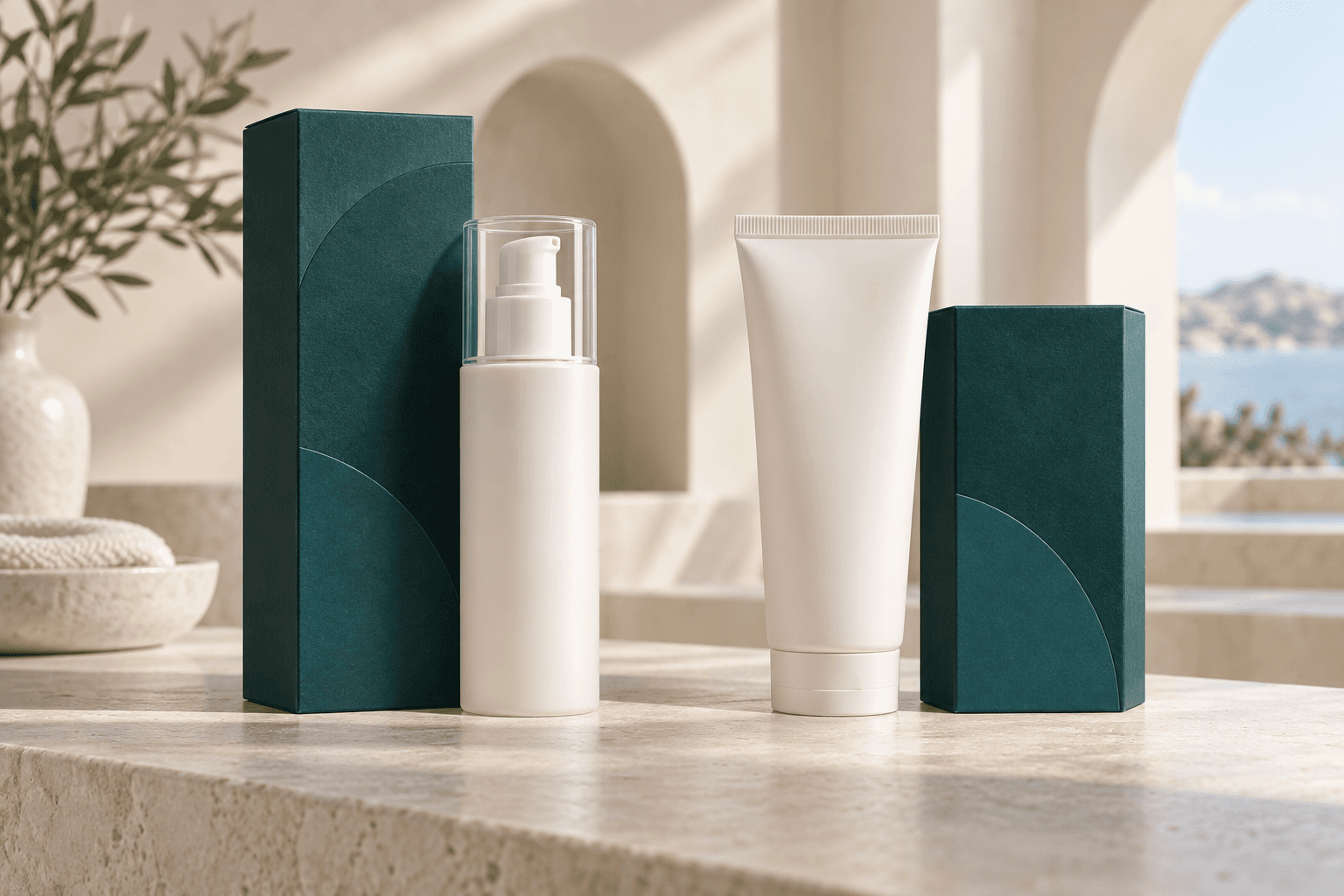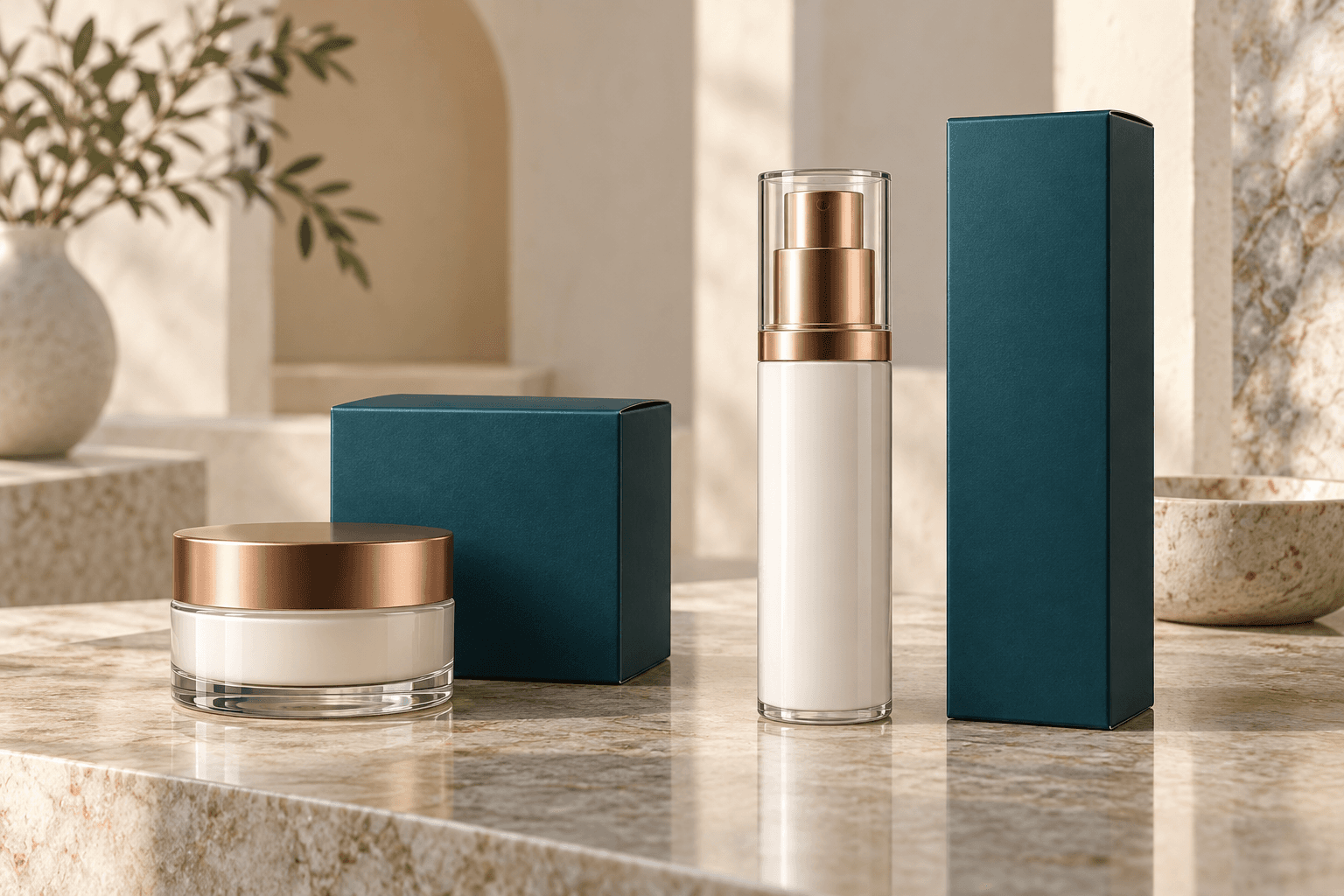

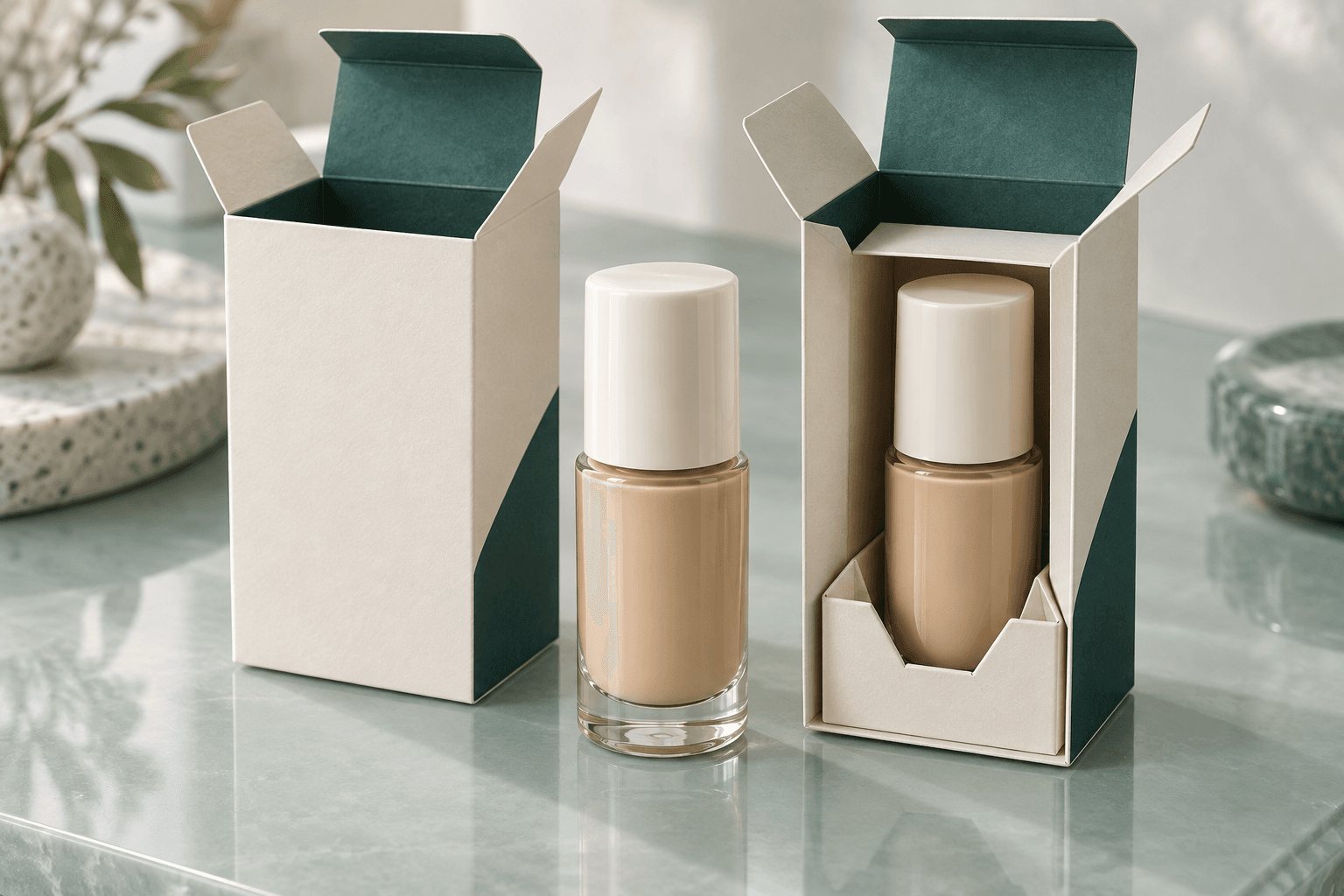
Foundation bottles do not automatically need inserts. An insert is worth considering when the carton alone cannot adequately control an identified issue: movement of a heavy glass bottle, a narrow body beneath a broad pump, orientation for presentation, or separation from another item. Evaluate the filled bottle, closure, carton and distribution pack together. An insert that looks precise but presses on the actuator or makes removal difficult may create a new problem rather than solve the original one.
The decision about foundation bottle packaging inserts should therefore start with an observation, not a material preference. Is the bottle shifting at its base? Is the overcap rubbing against a flap? Is the product turning away from a viewing area? This guide turns those different concerns into a practical sample comparison while keeping the general topic of insert materials with PearlFold’s existing insert resources.
First decide what the insert would change
Put the representative filled foundation bottle into the proposed carton without an insert, where that is a sensible candidate. Observe the intended packing, opening and removal sequence. Record any unwanted movement or contact, identifying where it occurs. The question is not whether an empty space exists; it is whether that space causes a problem within the actual brief.
| Observation | Possible design response to investigate | Check before accepting it |
|---|---|---|
| Heavy base shifts sideways | Base locator or broader supporting geometry | Support contacts the intended bottle surface without trapping it |
| Wide pump or overcap rubs the carton | Revised clearances or a different locating position | No load is transferred onto the actuator |
| Front label rotates away from a window | Orientation-specific retention | The bottle can still be packed and removed comfortably |
| Bottle contacts a bundled applicator | Separate retained positions | Neither item moves into the other’s space during handling |
| No meaningful problem found | Continue evaluating the simpler carton | The full distribution configuration still receives appropriate review |
These are investigation paths, not instructions to add a particular component. A tighter exterior, different carton proportion or change in orientation may be a better answer than another part. Compare alternatives against the same acceptance criteria so an insert does not win merely because it appears more elaborate.
Glass weight and geometry belong in the same discussion
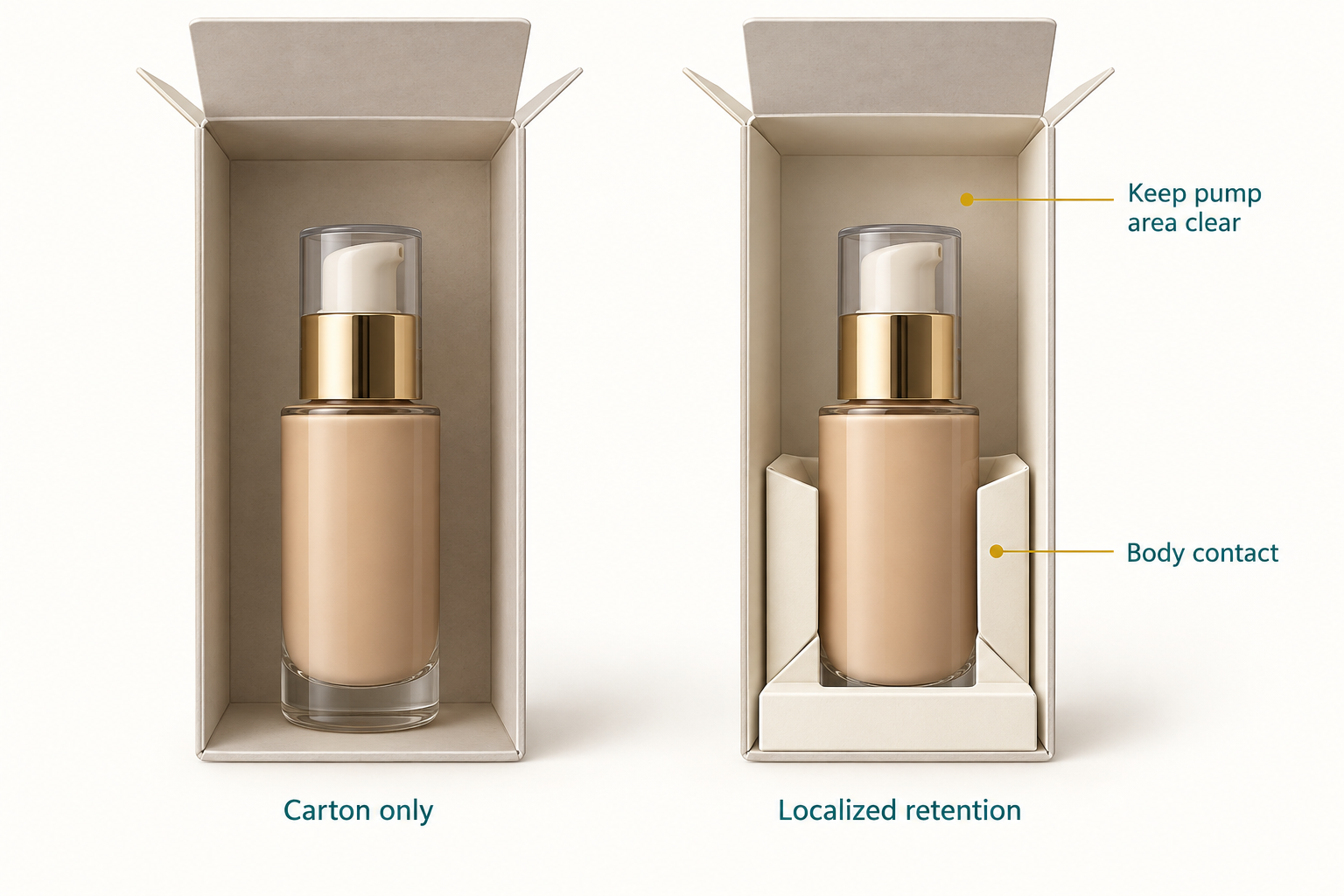
Record the filled unit weight rather than the empty bottle alone. Note the base footprint, shoulder shape and center of the visible mass. A squat bottle and a tall narrow bottle can impose different handling questions even if their fill volumes match. Weight helps explain the brief; it does not by itself determine an insert material or thickness.
Glass also needs careful attention to contact surfaces and the distribution environment. Do not assume every glass foundation bottle requires the same support, or that a snug retail cavity proves breakage protection. Any claim about protective performance should be supported by an appropriate evaluation of the complete packed product.
For a lighter plastic or airless unit, movement can still matter to appearance, pump clearance and removal. Conversely, a particular glass unit may fit a suitable carton without an added insert. Material names are a starting description, not a substitute for inspecting the specific bottle and proposed structure.
Keep the pump outside the load-bearing plan
Identify the product’s normal retail closure state: pump locked, overcap fitted or another approved configuration. Measure the complete closed envelope and photograph the actuator’s position. The insert should not rely on pressing a pump down to achieve the intended box height.
Foundation packs are not all geometrically interchangeable. Aptar’s Micro airless packaging family, for example, offers different pump, bottle and overcap combinations. That illustrates why the final combination matters; a name or nominal capacity alone does not specify the envelope. It does not establish that PearlFold supplies those components.
Check whether the overcap is merely a cover or an acceptable locating surface according to the primary-packaging supplier. A structure that holds the cap firmly while allowing the bottle to move may not hold the complete assembly as intended. During removal, observe whether the cap stays seated or is pulled away unintentionally.
Separate locating, supporting and cushioning
Locating controls position. Supporting provides a contact path for the product within the structure. Cushioning concerns how a system responds to mechanical inputs. One insert may perform more than one role, but the terms are not interchangeable, and a decorative die-cut hole should not automatically be called a cushioning system.
A folded paperboard feature might locate a bottle at a selected height. A shaped tray might distribute contact over other areas. Other materials may be proposed when the brief calls for them, but availability, compatibility and disposal claims need project-specific confirmation. Start with the required function before comparing material names.
The existing insert protection guide covers that broader decision. For foundation, keep the investigation focused on the base, shoulder, pump and removal path so the product-specific review adds useful information instead of repeating a generic material catalog.
Make removal part of the retention test
Ask a reviewer who did not design the sample to open it and take out the bottle normally. Can they reach the body? Does a finger recess provide useful access? Do they instinctively pull on the pump or overcap because those are the only available grip points?
If extraction requires force, document where the resistance occurs. Enlarging every cavity may create avoidable movement elsewhere. A localized access change, revised contact height or different opening sequence can be worth comparing. Do not let a presentation photograph conceal a pack-out that is difficult to use.
Also observe packing. An insert that holds correctly once assembled may be awkward to erect or may be easy to load backwards. Record the intended sequence and orientation, particularly where the bottle has a front label, asymmetrical pump or uneven base. The structure needs to support repeatable assembly as well as the final reveal.
Run a paired sample comparison
Use the same bottle revision and final decoration in both candidates. Compare a reasonable carton-only option with the proposed retained version. Keep the rest of the pack-out consistent so the result is not distorted by a different cap, empty product or missing leaflet.
Record five observations: position after handling, contact marks, closure clearance, loading steps and removal effort. Add a specific presentation criterion if the bottle must face a window or sit at a defined height. Agree what constitutes acceptable performance before choosing the more visually impressive sample.
Distribution review is separate from this tabletop comparison. ISTA’s design and testing guidance emphasizes defining damage criteria and documenting testing. The relevant package evaluation should include the actual shipment configuration; do not describe a casual fit check as a certified transit test.
Document the reason for the final choice
An approval record should state why the insert is included or omitted. Connect that reason to an observed requirement, such as keeping the bottle facing forward while allowing body access. Identify the bottle sample, insert revision, outer carton and any other packed components.
Changes to the pump, bottle weight, decorative finish or inner geometry may require a fresh review. Retaining an old insert simply because the outer box still closes can overlook a changed contact point. Keep the relevant product and packaging specifications together so the next reorder uses the approved combination.
For commercial development, review foundation box options with the exact bottle and the issue you need to resolve. Include the comparison observations and representative dimensions in your quote request; that is more actionable than requesting an unspecified protective insert.
Foundation insert questions
Does every glass foundation bottle need an insert?
No universal rule applies. Assess its filled weight, geometry, carton fit and shipment context. The decision should follow an identified support or retention requirement and appropriate package evaluation.
Can an insert rest against the pump?
Do not assume the actuator is a suitable support point. Establish the intended locked or capped state and review contact surfaces with the primary-packaging supplier before approving the interior geometry.
Is an airless bottle too light to need retention?
Weight is only one consideration. A light unit may still rotate, rub or be difficult to remove. Evaluate the actual configuration rather than using airless construction as an automatic exemption.
Should the bottle sit tightly in the cavity?
It should meet the agreed retention requirement without damaging contact or impractical extraction. Excessive tightness can shift the problem to packing, decoration or cap separation.
Can one insert work across foundation shades?
Potentially, when the finished bottle and closure geometry match. Verify any alternate cap, decoration or limited-edition component, and manage shade identification independently from the structural revision.
Which insert material is best?
Choose by function, product contact, assembly, presentation and validated performance. No material name alone determines the answer; availability and environmental claims also need confirmation for the complete design.
Does an insert prevent foundation leakage?
It is not a substitute for a suitable sealed primary container. Formula compatibility and closure performance belong to the product-packaging system and need their own verification.
Should a sponge share the bottle cavity?
Document a separate position when components could contact or interfere with one another. Check removal order and whether the accessory changes the usable height or presses against the bottle.
Can I approve an insert using an empty bottle?
An empty sample can support early geometry work, but filled weight and final components are needed for a representative handling review. Label preliminary approvals accordingly.
What evidence should be retained after approval?
Keep the approved product and packaging references, pack-out photographs, acceptance observations and relevant test documentation. Distinguish a visual fit approval from any separately established protective-performance evidence.