

Folding cartons vs rigid boxes solve different packaging problems. A folding carton is usually the more efficient direction for an individual beauty product that needs a printed retail shell. A rigid box is more appropriate when presentation, gifting, a set, or a deliberate reveal carries more weight in the brief. The right answer depends on the product, channel, order plan, protection requirements, and customer experience, not on which structure looks more expensive in a photograph.
This guide gives beauty and personal-care teams a practical way to compare both formats before requesting a custom packaging quote. It does not replace structural review with the finished product. Dimensions, materials, insert construction, print, finishes, quantity, and production terms should be confirmed in the written specification.
What is the main difference between a folding carton vs rigid box?
A folding carton is made from paperboard that is printed, cut, creased, folded, and glued into a lightweight retail package. It normally ships or stores flat before packing and uses its panel geometry for strength. A rigid box uses substantially thicker board that is cut and wrapped to form a set-up structure. It normally keeps its shape before the product is packed.
That construction difference affects almost every later decision. Folding cartons tend to use less storage space and suit efficient single-unit presentation. Rigid boxes create more physical presence and can support trays, magnetic-style closures, sleeves, or lift-off lids. Neither format is automatically better. The useful question is which format supports the product and commercial plan with the least unnecessary complexity.
When does a folding carton fit a beauty product?
A folding carton is often a strong starting point for lipstick, serum, cream, cleanser, fragrance, hair-care, and bath products sold as individual retail units. It provides printable panels for brand hierarchy and supplied product information while keeping the structure comparatively light. Tuck-end, sleeve, window, and other carton directions can be considered after the product dimensions and packing method are known.
Choose a folding carton when the product already has a stable primary container, the package needs to work efficiently at shelf scale, and the unboxing sequence can remain simple. A carton can still feel premium through proportion, board selection, color control, typography, foil, embossing, or a deliberate opening detail. Premium presentation comes from coordinated choices, not from adding every available finish.
When does a rigid box make more sense?
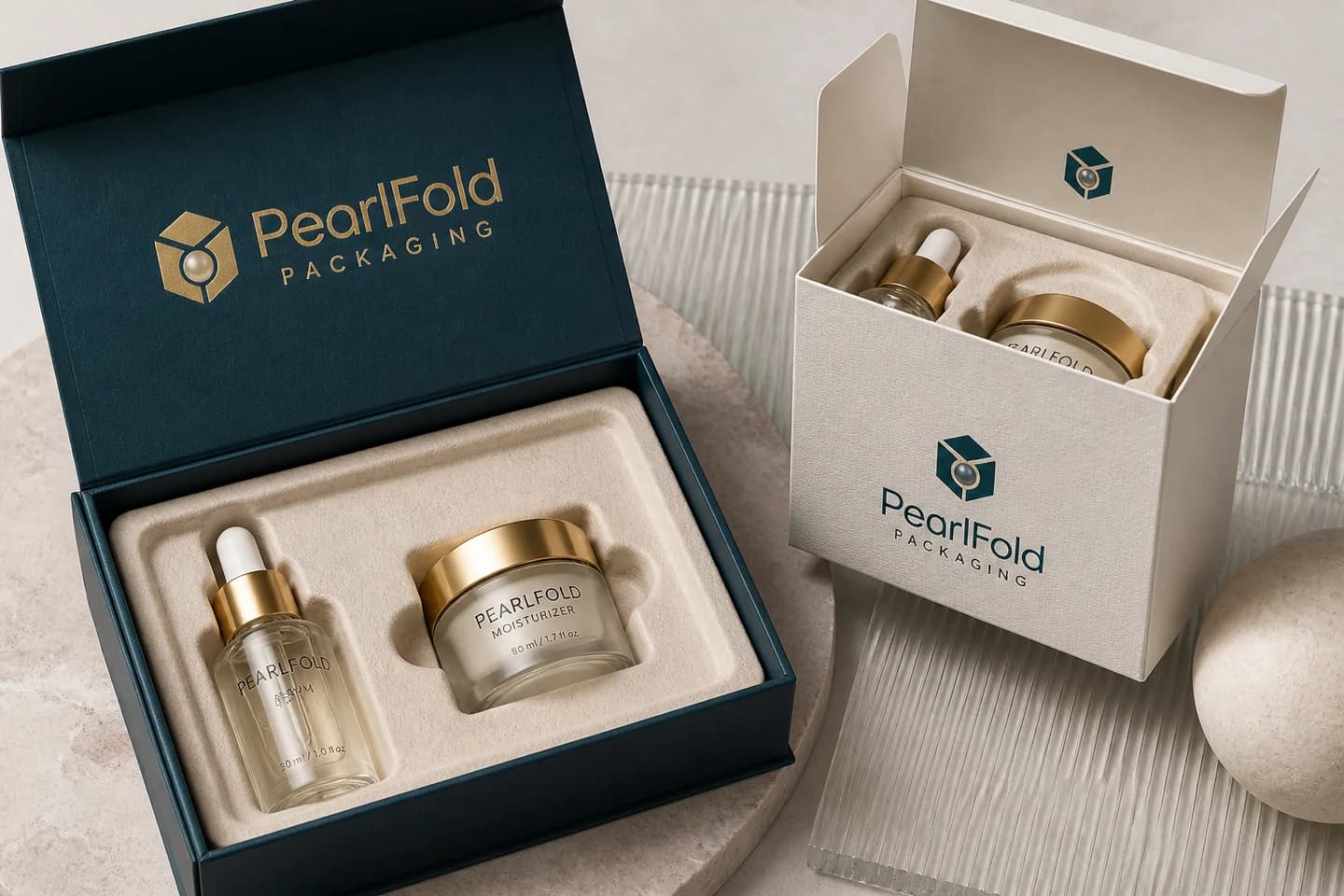
A rigid box earns its place when the structure is part of the product experience. Gift sets, discovery collections, launch kits, premium fragrance, multi-component skincare, and products with reusable presentation value may benefit from a set-up box. The thicker wrapped board can create a more substantial hand feel and gives an insert or tray a stable outer frame.
That presence also adds decisions. The brief should define the opening style, lid depth, hinge or closure direction, insert material, removal access, pack-out sequence, and how the box will be protected in transit. A rigid box that is larger than the product needs can increase void space and make the presentation feel less considered. The structure should be sized from the finished items and the intended reveal.
How do folding cartons and rigid boxes compare?
| Decision | Folding carton | Rigid box |
|---|---|---|
| Typical role | Individual retail packaging and coordinated product ranges | Presentation sets, gifting, launch kits, and premium reveals |
| Construction | Printed and creased paperboard folded into shape | Thicker board assembled and wrapped as a set-up box |
| Storage before packing | Often supplied flat, subject to the final style | Normally retains its assembled volume |
| Insert need | Optional; depends on fit and protection | Common for sets and controlled presentation |
| Artwork planning | Panel hierarchy follows folds, flaps, and seam placement | Artwork follows wrapped faces, lid/base relationships, and lining |
| Best decision test | Does a light printed shell meet the product and channel needs? | Does the presentation value justify the extra structure? |
How should product protection influence the choice?
Start with the primary container rather than the outer box. Record its finished dimensions, weight, closure, vulnerable edges, surface finish, and any projecting parts. A glass bottle, dropper, pump, compact, or jar can create different pressure points. The outer package must allow the item to be packed and removed without excessive movement or abrasion.
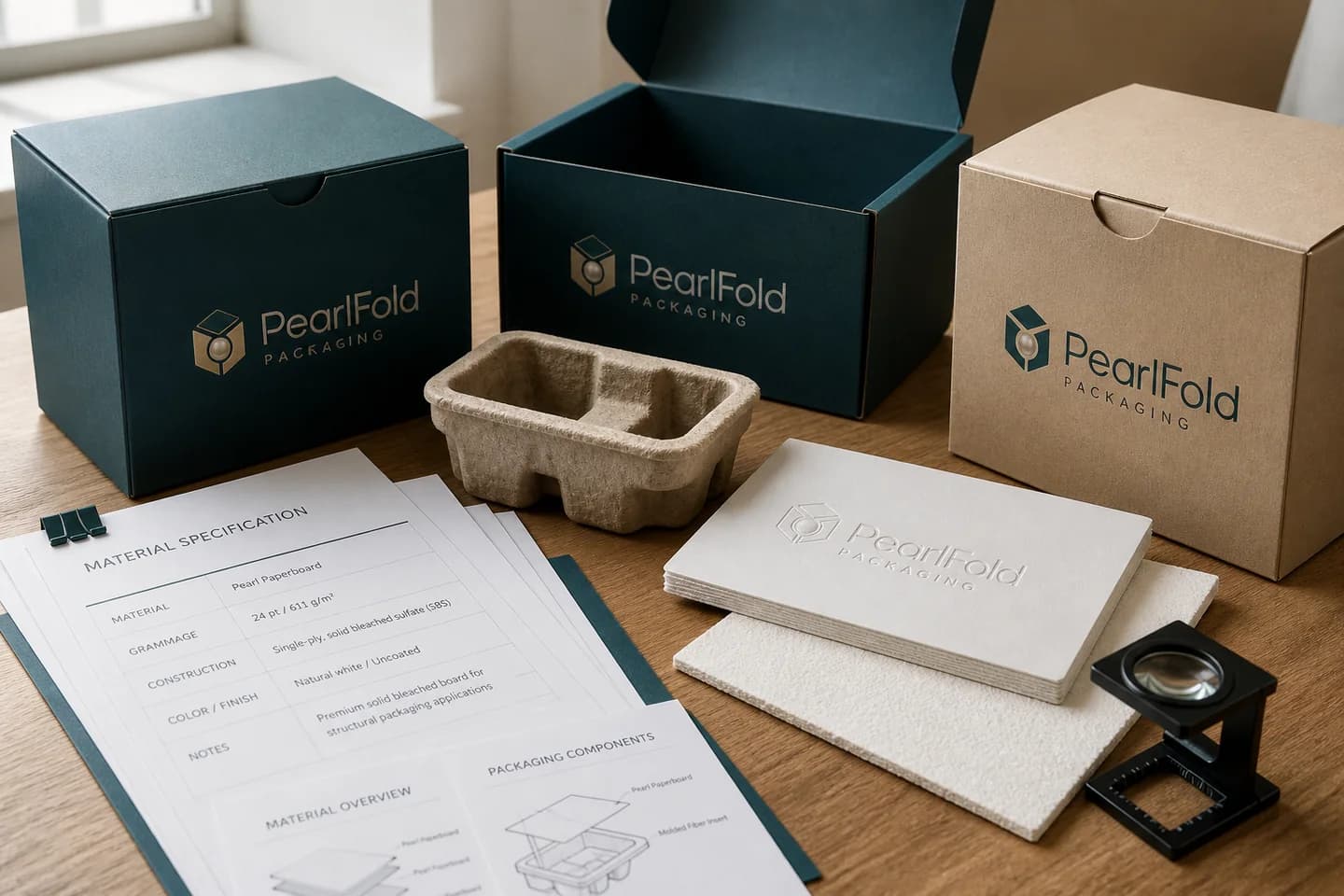
A folding carton may need a folded paperboard insert, internal platform, or divider when the product cannot be controlled by the outer walls alone. A rigid box may need a tray or insert that distributes weight and holds multiple items in a deliberate arrangement. Insert performance cannot be judged from a rendering alone. A physical sample using the actual product is the dependable way to review fit, removal access, and the opening sequence.
Which format gives more freedom for branding and finishes?
Both formats can carry a disciplined premium identity. Folding cartons offer continuous printed panels and work well for coordinated SKU systems. Rigid boxes provide large wrapped faces, lid interiors, liners, and reveal surfaces. The practical constraint is not creative freedom; it is how artwork, material, and finishing behave on the chosen construction.
Plan hierarchy before effects. The brand, product name, product type, variant, and supplied required copy need clear roles. Foil can create contrast, embossing can add tactile emphasis, and coatings can change surface response, but too many competing treatments can reduce clarity. PearlFold’s printing and finishes guide explains how to review these choices as one system.
How do order planning and sales channels affect the decision?
The package should match the way the product will be sold, stored, packed, and delivered. A single retail unit may prioritize panel efficiency and shelf consistency. A direct-to-consumer set may prioritize the opening sequence, protection within a shipping carton, and a coordinated group of products. A press kit may value presentation but have a different quantity and repeat-order plan from a permanent retail SKU.
Do not assume one structure will serve every channel equally well. If the same product appears in retail and gifting, it may be more coherent to use a folding carton for the core unit and a separate rigid presentation format for the set. That approach keeps the everyday pack efficient while giving the premium occasion enough space and structure.
What information is needed to compare both options accurately?
- Finished product dimensions, weight, and primary-container material
- Approximate quantity and expected repeat-order pattern
- Sales channel and pack-out method
- Number of products or components in the package
- Protection, insert, and removal-access requirements
- Artwork status and any required panel copy
- Preferred opening experience and visual references
- Destination and target timing for planning purposes
Photographs and a physical product sample can clarify details that dimensions alone miss. If the structure is still open, state that in the brief. A useful packaging partner should compare directions against the requirements instead of forcing the project into a predetermined box style.
What are the common mistakes in a folding-carton or rigid-box decision?
The first mistake is choosing from appearance alone. The second is designing around estimated dimensions. Other common problems include leaving insert planning until after the outer box is approved, treating a large package as automatically premium, ignoring the packing sequence, and adding finishes before the information hierarchy is stable.
Another mistake is comparing only unit presentation while ignoring the broader system. Storage, assembly, packing, transit protection, retail display, and repeat-order consistency all affect the value of a structure. The correct comparison is not “cheap versus luxury.” It is “which construction supports this product, this channel, and this brand with a defensible specification?”
How should a beauty brand make the final decision?
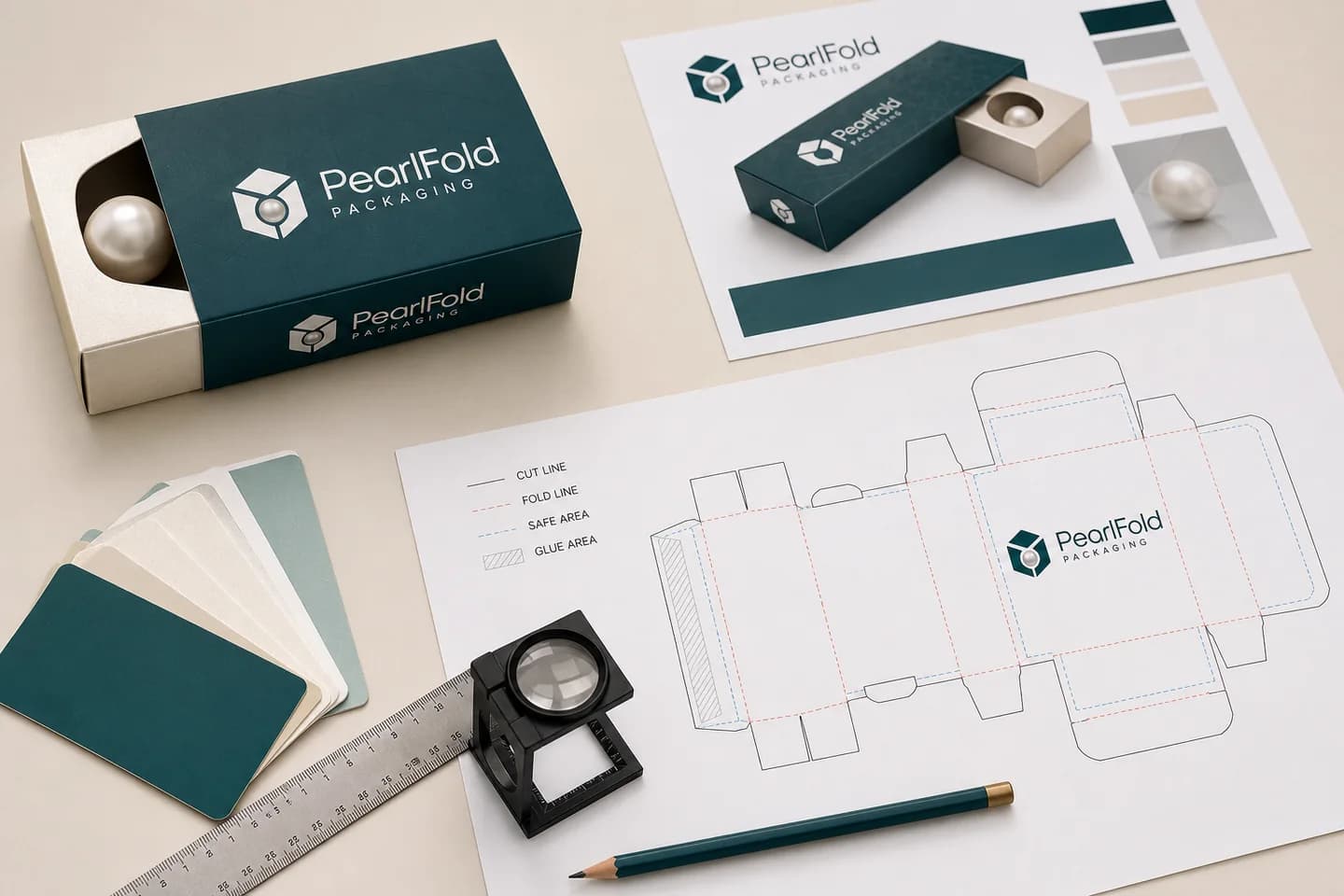
Use a folding carton when a well-sized printed shell meets the product’s protection and presentation needs. Use a rigid box when the set-up structure, insert, and reveal are meaningful parts of the offer. If both directions remain plausible, compare them against the same product measurements, quantity, artwork scope, and channel requirements. Then review a dieline, proof, or sample before production approval.
For the next step, prepare the product, dimensions, approximate quantity, packaging goal, and references. Review the custom packaging planning guide if the brief is still taking shape, or request a PearlFold custom quote when the project details are ready for a structure-specific discussion.
Questions Folding Cartons vs Rigid Boxes
Confirm whether the package is an individual retail unit, a set, or a gift presentation; whether the product needs an insert; how it will be packed; and which surfaces must carry supplied information. Ask what evidence will be reviewed for material and finish choices, what physical proof or sample is appropriate, and which specification will control production. These answers turn a visual preference into an approval record that the brand and packaging team can use consistently.
Also review the package beside the wider product range. A structure can suit one launch but create an inconsistent shelf system when repeated across several formats. Record which proportions, colors, finishes, and opening cues belong to the brand system, then allow the construction to change where product fit requires it. Coordinated packaging should make related products recognizable without hiding meaningful structural differences.
Keep that system record with the approved sample and quotation so later additions begin from confirmed decisions.
Frequently Asked Questions
What is the difference between folding cartons and rigid boxes?
Folding cartons are made from lightweight paperboard and are shipped flat for easy storage. Rigid boxes are made from thicker, stronger board and keep their shape during shipping and handling. Folding cartons are usually more affordable, while rigid boxes provide a more premium look and feel.
Are folding cartons cheaper than rigid boxes?
Yes. Folding cartons are generally cheaper than rigid boxes because they use less material and can be produced and shipped flat. They are a practical choice for brands that need attractive packaging while keeping packaging costs lower.
Which is better, folding cartons or rigid boxes?
The better option depends on the product and brand goals. Folding cartons are better for lightweight, cost-effective packaging, while rigid boxes are better for luxury products, gift packaging, and products that need stronger structural protection.
Are rigid boxes stronger than folding cartons?
Yes. Rigid boxes are typically stronger and more durable because they are made from thicker board. They offer better protection for premium or delicate products and maintain their shape during use.
What products use folding cartons?
Folding cartons are commonly used for cosmetics, food, pharmaceuticals, candles, electronics, retail products, soap, and other lightweight consumer goods. Their printable surface also makes them useful for product branding and retail displays.
What products use rigid boxes?
Rigid boxes are commonly used for luxury cosmetics, jewelry, watches, electronics, gift sets, premium apparel, perfumes, and high-end retail products. They are often selected when presentation and durability are important.
Do folding cartons provide good product protection?
Yes. Folding cartons can provide good protection when the correct paperboard thickness and internal structure are selected. Inserts, dividers, and custom die-cuts can also help keep products secure inside the carton.
Are rigid boxes better for luxury packaging?
Yes. Rigid boxes are often preferred for luxury packaging because their thick construction creates a sturdy and premium unboxing experience. They can also be customized with finishes such as foil stamping, embossing, debossing, and specialty coatings.
Which packaging takes up less storage space?
Folding cartons generally take up less storage space because they can be manufactured and stored flat. Rigid boxes are usually shipped and stored in their finished shape, so they require more warehouse space.
Which is more environmentally friendly, folding cartons or rigid boxes?
Both can be environmentally responsible when produced with recyclable materials and sustainable manufacturing practices. Folding cartons generally use less material and have a space-efficient flat format, which can reduce storage and transportation requirements.
Can folding cartons be customized like rigid boxes?
Yes. Folding cartons can be customized with different sizes, shapes, colors, printing methods, coatings, windows, die-cuts, and finishes. This allows brands to create distinctive packaging without using the heavier construction of rigid boxes.
Can rigid boxes be customized?
Yes. Rigid boxes offer extensive customization options, including custom dimensions, printed wraps, inserts, magnetic closures, ribbon pulls, foil stamping, embossing, and specialty finishes. These options make them suitable for premium brand presentation.
Which packaging is better for shipping?
For many lightweight retail products, folding cartons are a practical shipping option because they are lightweight and space-efficient. Rigid boxes offer greater structural strength but can add weight and shipping volume. The best choice depends on the product’s fragility and shipping requirements.
Which has a better unboxing experience?
Rigid boxes generally provide a more premium unboxing experience because of their substantial construction and presentation. However, a well-designed folding carton can also create an attractive and memorable unboxing experience through high-quality printing, finishes, and structural design.
Should I choose folding cartons or rigid boxes for my brand?
Choose folding cartons if you prioritize affordability, lightweight packaging, easy storage, and efficient shipping. Choose rigid boxes if your priorities are premium presentation, durability, and a luxury unboxing experience. Your product type, budget, shipping method, and target market should guide the final decision.
What is the main advantage of folding cartons?
The main advantage of folding cartons is their cost-effective and space-saving construction. They provide strong branding opportunities while being lightweight, easy to store, and efficient to transport.
What is the main advantage of rigid boxes?
The main advantage of rigid boxes is their strength and premium appearance. They are ideal for products where packaging quality, durability, and luxury presentation are important.
Can folding cartons and rigid boxes both be used for custom packaging?
Yes. Both packaging types can be manufactured in custom sizes, shapes, designs, and finishes. The choice depends on the product requirements, desired appearance, budget, and level of protection needed.
Folding cartons vs. rigid boxes: which should you choose?
Folding cartons are lightweight, affordable, customizable, and space-efficient, making them ideal for everyday retail packaging. Rigid boxes are stronger, more durable, and more luxurious, making them better suited to premium products, gift sets, and high-end packaging.